Buying a Home in Wisconsin: City Water vs Private Well Supply
Buying a Home in Wisconsin: City Water vs Private Well Supply
A home’s water source affects what you need to inspect, what records to request, and who is responsible when a problem arises. In Wisconsin, a city-water connection and a private well call for different checks before closing. This guide explains how to identify the supply, assess its condition, compare ongoing responsibilities, and make follow-up questions part of your purchase decision.
Start by identifying the water supply
A listing that says “city water” or “well water” is a useful starting point, not a substitute for confirmation. Ask the seller, real estate agent, and local water provider how the property receives water. Then check that information against available utility records, the property’s plumbing, and the relevant water-quality documents.
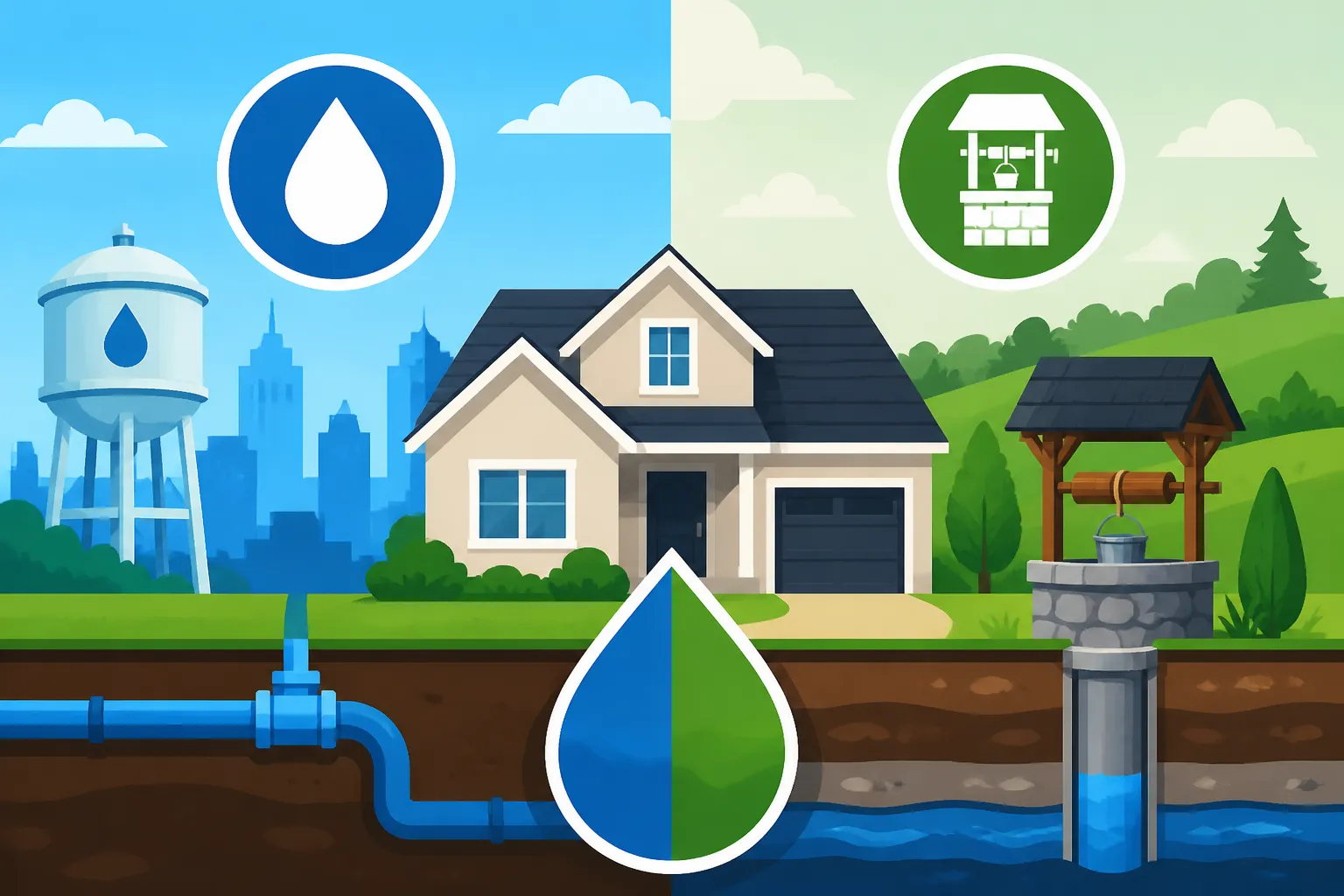
A municipal connection usually means water is delivered to the property through a public water system. The home may still have plumbing and a service line that need inspection, and the water provider’s records may not describe every pipe inside the property. A private well means the property relies on a well for its supply, so the buyer should investigate the well, pump, treatment equipment, and water quality rather than assume that a neighbor’s results apply.
The distinction has a formal basis. According to the Wisconsin Department of Health Services, a public water system has at least 15 service connections or serves an average of at least 25 individuals daily at least 60 days out of the year. According to the Wisconsin Department of Health Services, a well is private if it has fewer than 15 connections and serves fewer than 25 people. These definitions help distinguish public systems from private supplies; they do not, by themselves, tell you whether a particular home’s water is in good condition.
A property may be served by a community system that is not operated by a city, or it may share a well with other properties. If the arrangement is unclear, ask who operates the system, who maintains its equipment, and what documents describe the service. Do not assume that “not a municipal bill” means “private well,” or that a shared supply has the same records and responsibilities as a household well.
| Question to settle | City or other public-system supply | Private well supply |
|---|---|---|
| Where does the water come from? | A public water system delivers it to the property. Confirm the provider and service connection. | A well on or serving the property supplies the water. Confirm whether it is shared. |
| What records should you request? | Recent utility information and available water-quality reports, along with service-line and plumbing details. | Well construction and maintenance records, recent laboratory results, and treatment-equipment information. |
| Who should you ask about water quality? | The water provider for system information; a qualified professional or lab for questions about a particular home’s plumbing. | A qualified laboratory for property-specific sampling and a well professional for equipment or construction concerns. |
| What equipment deserves attention? | The service line, shutoff, interior plumbing, and any household treatment devices. | The well, pump, pressure equipment, plumbing, and treatment devices. |
| What can a buyer’s inspection show? | Visible conditions and some plumbing concerns, but not necessarily the provider’s full system records or a lab result from the home. | Visible equipment condition, but not necessarily water quality or hidden well defects. |
For a wider picture of municipal supplies, see Where Wisconsin Cities Get Drinking Water: Full Overview. If you are still unsure whether a specific address is connected to a public supply or a well, Is Your Home on City Water or a Well? How to Confirm focuses on ways to verify the source.
What to check when a home has city water
City water can reduce the amount of individual supply equipment a homeowner must manage, but it does not make every water question disappear. A buyer still needs to identify the water provider, review the information available for that system, and consider the condition of the service line and household plumbing.
Confirm the provider and service
Ask the seller for the water provider’s name and recent billing information. If the property is part of a shared or private distribution arrangement, ask who operates it and how the home is connected. Confirm the details with the provider rather than relying on a neighborhood description or an old listing.
The provider’s records can help establish whether the property is served and point you toward system-wide notices or water-quality information. They may not identify the full condition of the pipes on the property. Ask what the available records cover, and whether the records distinguish utility-owned infrastructure from customer-side plumbing. For more on that division, see Customer Side vs Utility Side Pipes in Wisconsin Municipal Systems.
Review water-quality information with its limits in mind
A public water system’s report can explain system sources, monitoring, and reported results. It is useful background, but it is not automatically a test of water collected from the kitchen tap in the home you are buying. Building plumbing, fixtures, and any treatment equipment can affect the water at an individual faucet.
Request the latest water-quality report available for the provider and read it alongside any notices or information specific to the property. Wisconsin Consumer Confidence Reports: A Tap Water Guide explains how to approach an annual report, while Understanding Differences Between City CCR Data and Faucet Tests covers why system results and a household sample answer different questions.
If the seller reports a taste, odor, color, or other concern, ask when it began, whether it affects one faucet or the whole property, and whether the provider has investigated it. Those details can help separate a system-wide issue from a plumbing or fixture concern, but they do not establish a cause. Ask the provider about unusual changes and consider property-specific testing or a plumbing inspection when appropriate.
Ask about service-line material and interior plumbing
The service line is the connection between a public water system and the building. Records may describe only part of that connection, and a provider’s information may not establish what material is present inside the building. Ask for any available service-line records and clarify which sections they cover. If the material is unknown, treat that as an open question rather than proof of a particular pipe type.
Also ask whether plumbing work has been done, whether any older components remain, and whether the seller has records of inspections or replacements. A visual check by a qualified professional can help identify accessible pipes, but it may not verify concealed sections. When lead is a concern, use a property-specific approach: review the pipe information, ask the provider what it can confirm, and discuss faucet testing or plumbing evaluation with a qualified professional. How to Find Out if Your Wisconsin Home Has a Lead Line and Getting a Certified Lead Test for Your Wisconsin Home’s Faucets cover those questions in more detail.
A filter is not a substitute for finding out what is in the water or what the plumbing is made of. If a treatment device is installed, request its model and maintenance information, then check whether its certified reduction claims match the issue you are trying to address. A filter designed for one contaminant may not address another. See Wisconsin Home Water Filtration Guide: Choosing the Right System before treating the presence of a filter as proof that a water concern has been resolved.
Look for property-specific clues
During a showing or inspection, note whether fixtures have visible staining, whether water appears discolored, or whether there are signs of leaks around plumbing and treatment equipment. These observations can guide follow-up questions, but appearance alone cannot confirm water safety or reveal every contaminant.
Ask whether the home has a softener, filter, or other treatment device, and whether it serves the whole house or only selected taps. Request maintenance records, operating instructions, and any recent test results taken before or after treatment. If a result was collected from treated water, find out whether a raw-water result is also available. Without that context, it may be difficult to tell what the equipment is intended to reduce or whether it is working as expected.
What to investigate when a home has a private well
Buying a home with a private well means evaluating both the supply equipment and the water itself. A well may be functioning while a test result still calls for follow-up; a clear-looking sample does not establish that the water has been tested for the concerns relevant to the property. Ask for records, arrange appropriate sampling, and seek qualified help when the results or equipment raise questions.
Request records and clarify the well arrangement
Ask the seller for available well construction, service, repair, and treatment records. Find out whether the well serves only the property or is shared, and ask for any written agreement or maintenance arrangement that explains how shared equipment and costs are handled. If multiple owners depend on one well, clarify access for repairs and who makes decisions about service.
If records are missing, ask what the seller knows and whether a well professional can inspect the system. Missing paperwork is not, on its own, proof that a well is defective. It does mean you have less information to use when judging the equipment’s history and condition. The Wisconsin Department of Health Services definition can also help clarify the distinction: a well is private if it has fewer than 15 connections and serves fewer than 25 people.
For a broader overview of testing and care, review Wisconsin Well Water Testing Guide: Recommended Test Schedules and Wisconsin Private Well Owner Responsibilities: Upkeep and Care. The right tests and maintenance plan depend on the well, the property, and the buyer’s concerns, so confirm recommended steps with a qualified laboratory or local health department.
Arrange a test that answers the right question
A recent report is most useful when you know where and how the sample was collected, which analytes were included, and whether the water had passed through treatment equipment. Ask for the complete report, not only a seller’s summary of the results. Check that the property address or sample location is clear and that the sample relates to the current well and plumbing.
If the available report is old, incomplete, or unclear, arrange new sampling through a qualified laboratory. Follow that laboratory’s collection and handling instructions closely; poor sampling can make a result less useful. Ask the lab which analytes are included in the selected panel and whether your concerns call for additional testing. A basic panel should not be treated as a test for every possible contaminant.
The nearby land use, well history, and visible or reported water problems may help guide questions about what to test. Do not choose treatment based only on a stain, smell, or a general assumption about local water. Get results first, then ask a qualified professional to match any proposed treatment to the actual findings. How to Find Out What Is Really in Your Wisconsin Well Water and Matching Treatment Systems to Your Actual Lab Results explain the logic behind that sequence.
If a lab report flags a result or uses unfamiliar units, ask the laboratory to explain what its result means and what follow-up it recommends. For health questions, contact the local health department or a medical professional. Avoid relying on an online comparison or a neighbor’s result to interpret a sample from a different well.
Inspect the well and related equipment
A well inspection should consider more than whether water comes out of a faucet. Ask a qualified well professional to evaluate accessible equipment and identify any issues that call for further review. Depending on the property, that may include the wellhead, pump, pressure tank, visible piping, and installed treatment equipment. The inspection’s scope matters: ask what was examined, what was inaccessible, and whether the report identifies recommended repairs or additional tests.
Request information about the age and service history of the pump and treatment devices if the seller has it. Ask whether the well has experienced low yield, interruptions, repairs, or changes in water quality. A buyer should not assume that a running pump has a known remaining service life, or that the absence of a service record means the equipment has never had a problem.
Treatment equipment also needs scrutiny. Find out what it is designed to reduce, whether it has been maintained, and whether any post-treatment testing verifies performance. A softener, for example, is designed for hardness minerals; it should not be assumed to address unrelated contaminants. Before accepting a treatment recommendation, compare the system’s certified claims with the lab results and consult a qualified installer where needed.
Consider the full household setup
The well is only part of the home’s water system. The pump and pressure equipment, plumbing, storage components, and treatment devices work together. Ask the inspector to explain how the system operates and whether any part appears disconnected, bypassed, or in need of service.
If the home has a septic system, ask how the seller has maintained both systems and whether records are available. This does not mean a well problem is necessarily caused by a septic system, but the location and condition of nearby systems can be relevant to a qualified inspection. Keep water-supply questions separate from septic-system questions while making sure both are addressed in the broader property review.
Compare costs, control, and day-to-day responsibility
There is no universal winner between public water and a private well. A public connection may mean a regular utility bill and less direct responsibility for source equipment, while a well may avoid a municipal water bill but leaves the owner responsible for well upkeep, testing, and equipment decisions. Actual costs depend on the property, the provider, the system’s condition, and the services included. Ask for current figures and records rather than relying on general assumptions.
| Ownership issue | City or other public-system supply | Private well supply |
|---|---|---|
| Routine water costs | Review recent bills and ask what charges apply to the account. | Ask about electricity and routine service costs associated with the well and treatment equipment. |
| Repairs | Confirm with the provider which parts of the connection it maintains and what falls to the property owner. | The owner generally needs to arrange service for the well equipment; clarify any shared-well agreement. |
| Water-quality information | Review system reports and ask the provider about notices or concerns specific to the service. | Obtain property-specific test results and decide with qualified help whether additional sampling is needed. |
| Treatment | Ask what household devices are installed and what they are intended to reduce. | Check existing treatment against lab results and request maintenance and performance records. |
| Supply interruptions | Ask the provider about the process for reporting an interruption and any property-specific notices. | Ask about past outages, pump issues, and what backup arrangements are practical for the household. |
| Future work | Clarify how a service-line or plumbing issue would be assessed and who may be responsible. | Budget for potential well, pump, plumbing, and treatment service based on inspection findings. |
Compare documented costs, not labels
For a city-connected home, review recent water bills and ask what charges are tied to the account. A bill may include charges beyond water use, so ask the provider or seller to explain the line items. Confirm whether the account is current and how the service will transfer or be established after closing with the appropriate provider.
For a well, request available service invoices and records for the pump, treatment units, and any shared system. Ask what maintenance has been done and whether the inspection identifies near-term work. An owner’s estimate of “low cost” is not a substitute for documents, and the purchase price does not tell you what repairs might be needed after closing.
In either case, build your comparison around this particular property. A municipal connection with uncertain service-line information may need follow-up. A well with complete records and favorable recent tests may present a different picture from a well with missing documentation and unresolved results. The source label alone cannot settle the financial comparison.
Understand who makes decisions
With public water, the provider manages the public system, but a homeowner may still have responsibilities for customer-side plumbing and equipment. Ask the provider to explain its service boundary and what procedures apply if the connection or water quality is in question. Do not assume that the provider maintains every pipe from the street to a faucet.
With a private well, the owner has a more direct role in monitoring the supply, arranging maintenance, and responding to test results. If the well is shared, responsibility may be divided among property owners. Before closing, ask for written documentation of the arrangement, including who can authorize repairs and how expenses are allocated. If no clear agreement exists, consult an appropriate real estate or legal professional about how to address that uncertainty.
Consider the household’s tolerance for maintenance
A buyer who prefers not to manage water-supply equipment may value a public connection, but should still inspect the home’s service line and plumbing. A buyer considering a well should be comfortable arranging testing and maintenance, keeping records, and responding when equipment needs attention. Neither source removes the need for informed decisions; it changes which decisions are most central to the owner.
Also consider how treatment affects daily use and ongoing upkeep. Equipment can require replacement media, cleaning, servicing, or other maintenance according to its design. Ask for the manufacturer’s instructions and a qualified assessment of its condition. If treatment is needed, understand what it changes and what it does not. Wisconsin Guide to Home Filtration and Drinking Water Systems is useful background when evaluating household treatment options.
A practical due-diligence process before closing
Water questions are easier to manage when they are addressed early enough to obtain records, arrange inspection, and follow up on findings. The exact timing and contractual options depend on the purchase agreement, so discuss deadlines and remedies with the buyer’s real estate professional or attorney.
-
Ask the seller to identify the source. Request a direct answer about whether the property is connected to a public system, served by a private well, or part of a shared arrangement. Ask for the provider’s name or well documentation.
-
Verify the source independently. Contact the water provider for a public connection, or review well records and consult a qualified well professional for a private supply. If the answer is uncertain, resolve it before treating the water arrangement as settled.
-
Request the relevant records. For public water, ask for recent bills, available water-quality reports, and any service-line information. For a well, request construction, service, treatment, and laboratory records, plus any documents for a shared-well arrangement.
-
Arrange inspections appropriate to the source. Have a qualified professional review accessible plumbing and equipment. For a well, ask a well professional to assess the supply equipment; for either source, consider whether the property’s plumbing needs separate attention.
-
Test when records do not answer the question. A private well may need a current, property-specific laboratory test. A public-system report may not answer a question about water at a particular faucet, especially where plumbing or treatment is involved. Ask a qualified lab what sampling is appropriate and follow its directions.
-
Get clarification on unclear results. Ask the laboratory to explain methods, units, flags, and recommended follow-up. For a possible health concern, contact the local health department or a medical professional rather than attempting to make a medical judgment from a test report.
-
Match any proposed treatment to the result. Before buying or accepting a device, confirm the contaminant or water characteristic it is designed and certified to reduce. Ask whether the device is appropriate for the measured level and whether post-installation testing or ongoing maintenance is recommended.
-
Put unresolved issues into the purchase discussion. Share inspection findings and missing documentation with the appropriate real estate professional. Depending on the contract and advice from qualified professionals, the buyer may ask for additional evaluation, records, repairs, or other terms before proceeding.
This process also helps prevent a common mistake: treating one document as a complete answer. A utility report describes the public system; a lab test describes the sample collected under its stated conditions; an inspection describes the equipment and visible conditions within its scope. Together, those records can provide a much better picture than any one of them alone.
Warning signs and questions that deserve follow-up
A concern is not automatically a reason to walk away from a home. It is a reason to understand what is known, what remains uncertain, and what a qualified professional recommends. Keep the distinction clear between a visible clue, a test result, and a confirmed diagnosis of the water system.
Records are missing or inconsistent
If the listing, seller, utility paperwork, and visible plumbing do not agree, pause and confirm the source. A bill from a prior owner, an old test, or a neighbor’s description may not reflect the current setup. Ask for documents tied to the property and current equipment. When the records cannot be found, ask what inspection or testing would fill the gap.
For a well, missing construction or service records can make it harder to understand how the supply has been maintained. For a public connection, incomplete pipe records may leave a question about service-line material. Neither situation proves a defect, but both call for a specific follow-up plan.
The seller describes a problem without documentation
If the seller mentions occasional discoloration, unusual taste, low pressure, or a past repair, ask for dates, affected fixtures, repair invoices, and any test results. Ask whether the concern was temporary or recurring and whether a provider, plumber, lab, or well professional investigated it. A verbal explanation may be accurate, but documentation helps the buyer evaluate what happened and whether the issue was resolved.
Changes in appearance or odor have many possible causes. They do not identify a contaminant on their own. If the concern continues, ask the relevant provider or a qualified professional how to investigate it, and consider testing that is designed for the suspected issue.
Treatment is present but its purpose is unclear
A treatment device can be a useful part of a home’s water system, but its presence does not show what was found in the water or whether the device is maintained. Ask for the original test results, the device’s certification information, service history, and any post-treatment results. If there are no records, have a qualified professional assess whether testing is warranted before relying on the equipment.
Avoid broad claims such as “the filter handles everything.” Treatment systems have specific reduction claims and maintenance requirements. A system selected for mineral taste, for example, may not address a separate chemical concern. NSF Drinking Water Certifications: Understanding Contaminant Limits offers more detail on why certification claims should be checked against the target contaminant.
The shared arrangement is informal
A shared well or other shared supply can be workable, but unclear responsibilities create practical risk. Ask who owns the equipment, who has access, how repair decisions are made, and what happens if the supply needs urgent service. Request any written agreement and have it reviewed as appropriate. If the arrangement depends only on verbal understandings, get professional advice about how to document it before closing.
A result is flagged or described as “safe” without context
Ask for the full lab report and identify the sample source, date, analytes, units, and any treatment in use. A statement that water is “safe” may refer to a limited test or a particular sample. Ask the laboratory what its report covers and what it does not cover. For health-effect questions, consult the local health department or a medical professional.
After closing: keep records and respond to changes
Once the purchase is complete, keep the water records with the home’s other maintenance documents. Save bills, test reports, repair invoices, treatment manuals, and information about service-line work. If you later sell the property, a clear record can make it easier for the next buyer to understand the system.
For a public connection, keep the provider’s contact information and note where to find current water-quality reports and notices. If the home has a treatment device, follow its maintenance schedule and retain service records. If there is a concern about a particular faucet or plumbing section, ask a qualified professional whether a household sample or plumbing inspection is the more useful next step.
For a private well, maintain a record of tests and equipment service. Use a qualified laboratory and follow its sample instructions. If a result changes, do not select a treatment device solely from an online description or a seller’s recommendation. Confirm the result and discuss the appropriate response with qualified professionals. For health questions, contact the local health department or a medical professional.
Changes in water appearance, taste, odor, or pressure should be considered in context. A provider may be able to tell you about system work or an interruption; a plumber or well professional can assess household equipment; a laboratory can test a sample. No single observation settles the cause. For example, Reporting Unusual Tap Water Taste or Odor to Your Utility Provider and How Wisconsin Water Systems Manage Pressure Loss and Main Breaks explain what information can help when a public-system concern arises.
When buying a home, the best choice is not automatically city water or a private well. The better choice is the one whose source, condition, records, costs, and responsibilities you understand well enough to make an informed decision. Confirm the supply, ask for evidence, follow up on gaps, and make unresolved questions part of the purchase discussion.
Frequently Asked Questions
Is a home with a private well always served by one household well?
No. A supply may be shared. Ask the seller who uses the well, who maintains it, and whether there is a written agreement describing responsibilities.
Does a public water report tell me exactly what comes from the home’s faucet?
Not necessarily. A system report describes the system’s reported information, while a sample from a home faucet reflects that sample’s collection conditions and plumbing. Ask the provider or a qualified laboratory which information answers your specific question.
Should I rely on a seller’s recent well test?
Request the complete laboratory report and check its sample location, date, analytes, units, and whether the sample was collected before or after treatment. If the report does not answer your concerns, ask a qualified laboratory about appropriate new testing.
Does a water filter make a home’s supply problem-free?
No. A treatment device is designed or certified to reduce specific substances or water characteristics, and it needs suitable maintenance. Check its claims against the home’s test results and consult a qualified professional when choosing treatment.
Who should I contact about a possible health concern in drinking water?
Ask the local health department or a medical professional for health guidance. For sample interpretation, contact the laboratory; for a public-system question, contact the water provider; for equipment concerns, consult a qualified plumber or well professional.
Sources
- Wisconsin Department of Health Services — Drinking Water: Public Water Systems | Wisconsin Department of Health Services (checked November 13, 2026)
- Wisconsin Department of Health Services — Drinking Water: Private Wells | Wisconsin Department of Health Services (checked November 13, 2026)
Disclaimer
This article is for general informational purposes only and does not constitute professional advice. Laws, prices and regulations vary by location and change over time. Consult a qualified professional for guidance on your specific situation. Wisconsin Water Guide is not a government agency or water utility and is not affiliated with any public water system.