Wisconsin Tap Notices: Boil Water vs Do Not Drink vs Do Not Use
Wisconsin tap notices can sound similar, but they do not allow the same uses of water. If a notice arrives, the practical question is what you can safely do at the sink, in the kitchen, and in the bathroom. This guide explains the difference between boil water, do not drink, and do not use notices, and how to follow the instructions without guessing.
What the Wisconsin tap notices mean
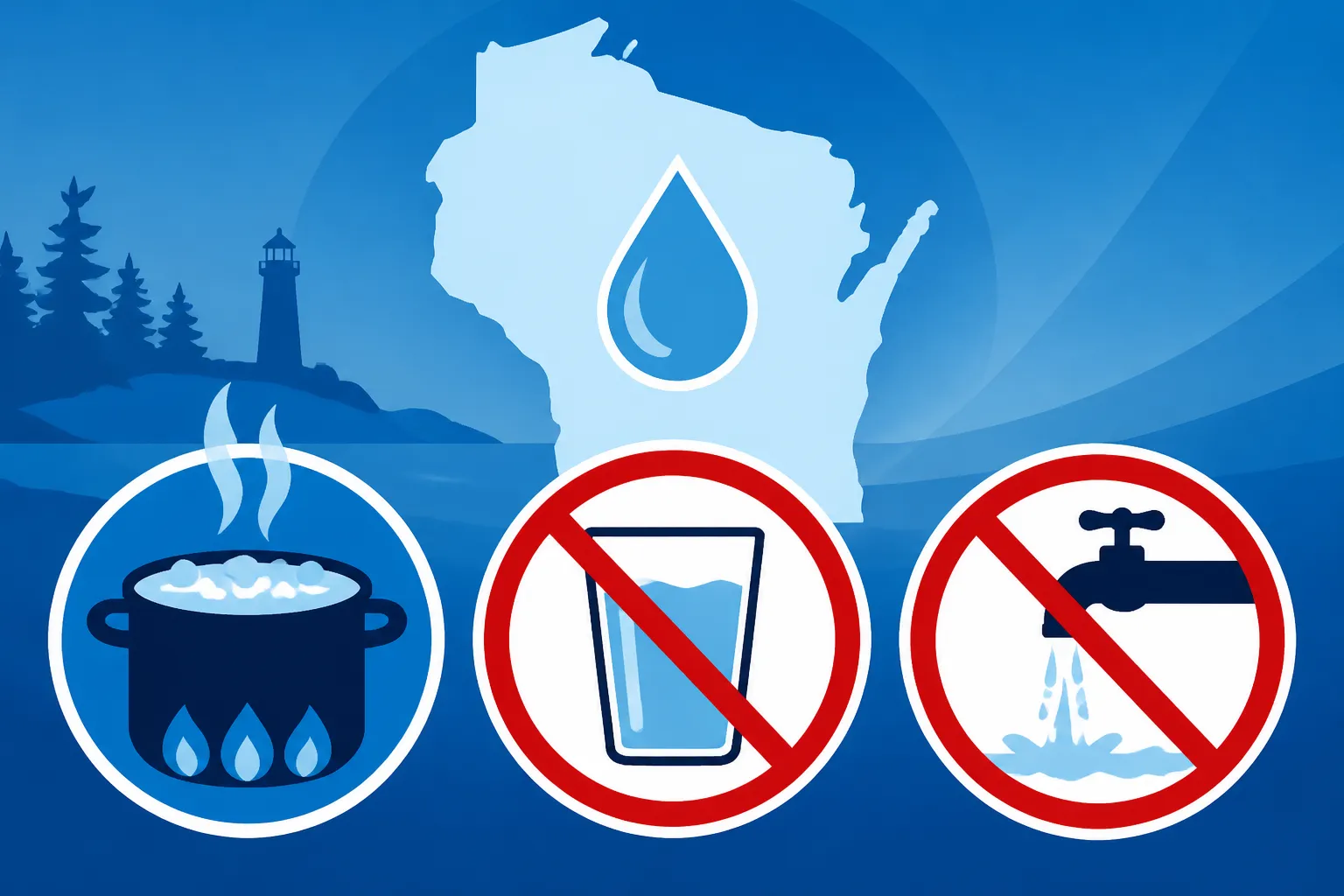
A notice tells customers that water from a particular supply should not be used in certain ways until the notice changes or is lifted. The restriction depends on the notice type. A boil water notice allows some uses after the water is treated as directed. A do not drink notice prohibits drinking and certain food uses, while allowing handwashing and showering. A do not use notice prohibits a much wider range of activities involving contact with the water.
According to the Wisconsin Department of Health Services, water covered by a boil water notice must be boiled for at least one minute before drinking or preparing food. According to the Wisconsin Department of Health Services, a do not drink notice means water is not safe to use for drinking, making drinks, and preparing foods that take up a lot of water, but handwashing and showering are allowed. According to the Wisconsin Department of Health Services, a do not use notice means water is not safe to use for drinking, preparing food, washing hands, showering or other activities that result in contact with the water.
| Notice | Drinking and making drinks | Food preparation | Handwashing and showering |
|---|---|---|---|
| Boil water | Boil the water as instructed before use | Boil water used for preparing food as instructed | Check the notice for directions on uses not covered by its wording |
| Do not drink | Do not drink the water or use it to make drinks | Do not use it for foods that take up a lot of water | Allowed under the Wisconsin Department of Health Services description |
| Do not use | Do not drink the water | Do not prepare food with it | Do not use it for handwashing, showering, or other activities that result in contact |
The table is a quick comparison, not a substitute for the notice itself. A local notice may provide additional details for a particular location or situation. Read the notice from the utility or responsible public agency and follow any specific instructions it gives. If the instructions are unclear, contact the organization that issued the notice using its official website to find current contact details.
A notice is not the same thing as a general water-quality report. A report summarizes testing or other information about a water system; a notice gives customers instructions for a current situation. For help understanding ongoing report results, see Wisconsin Consumer Confidence Reports: A Tap Water Guide or Understanding Detected Contaminants on Your Wisconsin Water Report.
How to follow a boil water notice
A boil water notice does not mean that water can be used as it comes from the tap. The key instruction from the Wisconsin Department of Health Services is that water covered by the notice must be boiled for at least one minute before drinking or preparing food. Use the notice’s wording as the starting point, and check it for any additional directions that apply to your household.
Make drinking water a deliberate step
When a notice is active, keep unboiled tap water out of drinks and other uses where it may be swallowed. That includes water served directly in a glass and water used to make beverages. If you are unsure whether a particular use counts as preparing food or a drink, use water treated as directed or another source the notice identifies as acceptable, and ask the issuing utility or agency for clarification.
Do not assume that water is ready just because it looks clear, has no unusual smell, or tastes normal. The notice, rather than the appearance or taste, should guide your decision. A clear tap does not tell you whether the reason for the notice has been resolved.
Prepare food with treated water
Use water treated as directed for food preparation. This is especially important for foods in which water is a main ingredient or is absorbed during preparation. The Wisconsin Department of Health Services specifically identifies foods that take up a lot of water in its explanation of a do not drink notice; for a boil water notice, it says water must be boiled before preparing food.
If you are cooking for other people, make sure everyone preparing or serving food understands which water is ready to use. A simple separation helps: keep treated water in a clean, clearly designated container, and do not pour untreated tap water into it. Avoid relying on memory about which pitcher, bottle, or pot contains treated water.
Be careful with uses the notice does not spell out
Some everyday activities involve water but are not named in a short notice summary. For example, people may wonder about brushing teeth, washing produce, rinsing dishes, making ice, or using a coffee maker. Do not assume that a device or activity makes the water safe. Check the full notice for directions on the specific use, and contact the issuing utility or agency if it does not address your question.
Do not treat a refrigerator dispenser, countertop appliance, pitcher, or household filter as a substitute for the notice’s instructions unless the responsible authority specifically says it is suitable for the situation. A treatment device is designed for particular uses and reduction claims; it is not a general replacement for an emergency instruction. For routine filter questions, Wisconsin Home Filtration Standards: From NSF Labels to DSPS Rules explains why a product’s certification and the contaminant claim matter.
Do not confuse boiling with every kind of treatment
Boiling is the instruction for a boil water notice. It is not a universal way to correct every possible water problem. Boiling does not remove all contaminants, and for some dissolved substances it can increase their concentration as water evaporates. If a notice says do not drink or do not use, do not decide to boil the water and use it anyway unless the issuing authority explicitly tells you to do so.
The notice type matters because the recommended response is tied to the specific concern. When there is any uncertainty about whether boiling applies, follow the more restrictive instruction you received and seek clarification from the utility or agency.
For broader advice about the actions customers may need to take during a boil notice, see Water Safety Rules During a Wisconsin Boil-Water Order. If the notice followed a pressure problem, When Does a Water Main Pressure Drop Require a Boil Notice? gives related context about why pressure events and customer notices may be discussed together.
What a do not drink notice allows and prohibits
A do not drink notice is not permission to use tap water for every purpose other than drinking. According to the Wisconsin Department of Health Services, the water is not safe to use for drinking, making drinks, and preparing foods that take up a lot of water. The same description says handwashing and showering are allowed.
That distinction can be easy to miss. A household may hear “do not drink” and assume that all other uses are unrestricted. But food and drink uses are included in the restriction, and the exact wording of the notice controls. Do not use the water for the listed prohibited activities simply because it looks or tastes normal.
Plan food and drinks around the restriction
Use an alternative source or follow the notice’s specific directions for drinking, making drinks, and preparing foods that take up a lot of water. Do not use the tap water to fill a drinking bottle, make a beverage, or prepare a food that relies heavily on water. If the notice does not explain a particular recipe or preparation method, ask the issuing authority rather than trying to infer whether it is allowed.
The notice’s wording does not automatically answer every kitchen question. For example, it may not name a specific appliance or food. Do not assume that heating water in an appliance makes it acceptable; a device may heat water without bringing it to the conditions required for a boil water notice, and the do not drink instruction is not the same as a boil water instruction.
Use the permitted activities with care
The Wisconsin Department of Health Services says handwashing and showering are allowed under a do not drink notice. Follow any additional precautions included in the notice, especially if it addresses a particular use or group of customers. If the notice gives more detailed directions than a general description, use those directions.
Activities involving the mouth, food, or an appliance may not fit neatly into the phrase “handwashing and showering.” If you are unsure about toothbrushing, bathing young children, washing dishes, or another activity, consult the full notice and contact the issuer. Do not extend the stated permission to activities that are not covered.
Keep a do not drink notice separate from a do not use notice
A do not drink notice allows handwashing and showering under the Wisconsin Department of Health Services description. A do not use notice does not. That difference is important for bathrooms, kitchens, and other areas where water touches skin or surfaces.
If a message uses more than one kind of instruction, or says that a do not drink notice has changed to a do not use notice, follow the latest and more restrictive directions. Do not rely on an earlier message, a neighbor’s summary, or a notice posted for a different address or part of the service area. For renters, Living in a Wisconsin Rental? How to Stay Informed on Boil Notices covers practical ways to keep track of notices that affect a home.
What a do not use notice means at home
A do not use notice is the broadest of the notice types discussed here. According to the Wisconsin Department of Health Services, water under a do not use notice is not safe to use for drinking, preparing food, washing hands, showering or other activities that result in contact with the water.
The phrase “other activities that result in contact” is important. Do not treat the notice as a drinking-water warning only. Avoid the listed activities and other uses that bring the water into contact with people. Read the full notice for any specific instructions about the affected property, facilities, or permitted exceptions.
Treat contact as the deciding question
If water would touch your skin, food, hands, or another part of your body during an activity, do not assume that activity is allowed under a do not use notice. The Wisconsin Department of Health Services description explicitly includes washing hands and showering, as well as other activities that result in contact with the water.
This makes a do not use notice different from a do not drink notice in a practical way. Under a do not drink notice, handwashing and showering are allowed according to the state description. Under a do not use notice, those activities are prohibited. Do not use boiling to override a do not use instruction unless the notice issuer specifically directs that approach.
Think through less obvious household uses
A notice may not list every device or task in a home. Consider whether water from the tap could contact a person or something they will eat or drink. If the answer is yes, or if the use is uncertain, stop and check the notice or ask the issuing utility or agency for direction. Avoid guessing about ice makers, humidifiers, water dispensers, food equipment, or cleaning tasks when the notice does not address them.
If you operate a business, care for others, or share water access in a multi-unit building, make sure people who use the affected taps know the restriction. Do not assume that a posted message in one room reaches everyone. A short written instruction at the point of use can reduce confusion, but it should match the official notice and should not add unsupported exceptions.
Use another source only as the notice allows
If the notice directs customers to use an alternative source, follow its directions and make sure the source is appropriate for the use. Do not connect a temporary hose, tank, or other supply to household plumbing in a way that could create a cross-connection. Plumbing connections can create backflow concerns; see Backflow Hazards and Cross Connection Surveys in Wisconsin Taps for more on why separate water supplies require care.
If you need information about how to handle an unusual water appearance after utility work, do not use color or clarity as a reason to ignore a notice. Managing Discolored Tap Water After City Hydrant Flushing Work discusses discolored water as a separate issue; the notice itself remains the authority for what uses are allowed during an active restriction.
Choosing the right response when a notice is confusing
The safest response begins with the exact notice, not a general memory of what a particular phrase usually means. A brief alert may be forwarded through a text, email, building message, or social post and may omit details. Find the full notice from the issuing utility or responsible agency, then confirm that it applies to your location and water service.
Check who issued it and where it applies
A notice may apply to a specific service area, building, or group of customers rather than every home in a city. Confirm the affected location before changing how you use water or assuming a nearby notice does not apply to you. The utility or agency that issued the notice can clarify the area and provide current instructions.
This is especially useful for renters, people in shared buildings, and households where the person who received the alert is not the person preparing food or caring for children. Share the full instructions, not just a shortened label such as “water alert.” The details determine whether boiling is required, whether drinking and food preparation are prohibited, or whether contact with water must stop.
For finding system information outside an urgent notice, How to Look Up Your Town on the Wisconsin Drinking Water Portal and Does Wisconsin’s DNR Portal Show Live Water Outages? may help distinguish general public water-system records from current customer instructions. A database or report should not replace an active alert from the utility.
Follow the most restrictive current instruction
If a notice is updated, replaced, or clarified, follow the newest instruction that applies to your location. If two messages seem to conflict, do not choose the less restrictive one based on convenience. Contact the issuer for clarification. Until you receive a clear answer, use the more cautious instruction that you can confirm applies to your tap.
Do not treat a neighbor’s experience as proof that your water is covered by a different instruction. A nearby home may be served by another system or area, and people may receive alerts at different times. Confirm your own service address or account details with the utility.
Do not combine notice categories into a single rule
A common mistake is to assume every water notice means “boil it.” That is only the instruction for a boil water notice. A do not drink notice prohibits drinking, making drinks, and preparing foods that take up a lot of water, while allowing handwashing and showering under the Wisconsin Department of Health Services description. A do not use notice prohibits drinking, food preparation, handwashing, showering, and other activities involving contact.
Another mistake is to assume that “do not drink” and “do not use” are interchangeable. They are not. If an alert says do not use, do not rely on the permitted activities associated with a do not drink notice. If an alert says boil water, do not infer that all contact uses are prohibited, but check the notice for specific directions about activities it does not address.
Ask focused questions
When contacting the issuer, describe the exact use you are unsure about and ask whether the notice covers it. Useful questions might include whether a specific food preparation method is allowed, whether a household appliance can be used, or whether a particular bathroom activity is covered. Ask whether the instruction applies to your service location and whether there is a newer notice.
Use the official utility or agency website to find current contact details. This site is an independent guide, not a utility or public agency, and cannot confirm whether a particular tap is affected or whether a notice has changed.
Everyday household planning during a notice
A notice can affect several people at once, and confusion often happens when household members rely on different summaries. A small amount of planning helps everyone use the same instruction and reduces the chance that untreated or prohibited water is used by mistake.
Make water use easy to distinguish
Keep water treated according to a boil notice separate from water that has not been treated. Use a clean, covered container and make sure household members know which water is ready for the uses allowed by the notice. Do not top off a container with tap water unless the tap water has been treated as directed.
If an alternative water source is being used, keep it clearly separate from the affected tap supply. Do not make a plumbing connection or use a device in a way that could bring the supplies into contact. If a household member is uncertain which source to use, pause and check the written notice rather than relying on a verbal recollection.
Give clear instructions to everyone using the tap
Tell household members, visitors, caregivers, and anyone preparing food which notice is active and what it prohibits. Avoid vague directions such as “be careful with the water.” State the applicable rule in practical terms: whether water needs to be boiled for drinking or food preparation, whether drinking and certain food uses are prohibited, or whether contact with the water must stop.
If a notice changes, update any household reminder promptly. Remove an old note once it no longer applies, but keep the official message available until the issuing authority says the restriction has ended or provides replacement directions. This helps prevent someone from following a stale instruction.
Handle questions about children and health with the right help
Households may need specific guidance for bathing, feeding, medication preparation, or other situations involving an individual’s health needs. Do not guess based on a general summary, particularly when a child, an older adult, or someone with a medical concern is involved. Ask the issuing utility or agency what the notice allows for the water use in question. For questions about health effects or a person’s medical needs, contact a local health department or medical professional.
The notice category does not replace individualized health advice. It tells customers what water uses are restricted or allowed under the notice; a medical professional can advise about personal circumstances.
Keep businesses and shared spaces from improvising
In a workplace, school, rental property, or shared building, a single customer alert may not reach every person who uses the taps. The person responsible for the space should share the official directions with staff, tenants, visitors, or other users as appropriate. If the notice does not explain a particular operational use, contact the issuer rather than creating a local exception.
Food preparation and water-contact activities deserve particular attention because different notice types impose different limits. A kitchen should not continue an activity simply because a tap is not used for drinking directly. A do not drink notice includes certain food preparation, and a do not use notice prohibits food preparation altogether under the Wisconsin Department of Health Services description.
When the notice changes or ends
Do not decide that a notice is over because water pressure has returned, the water looks clear, a repair appears complete, or a neighbor says the restriction ended. The utility or responsible public agency should provide the current status and any instructions for resuming normal use.
Wait for an official update
Keep following the active notice until the issuer says it has changed or ended. If you have not received an update, check the official utility or agency website or use its current contact details. Do not rely on an old message that does not include a clear status.
Some customers may receive alerts through different channels, so an update may not reach everyone at the same time. If a building manager or landlord relays information, ask for the original notice or confirm the status with the issuer. For information about what a public water report can and cannot tell you, see Annual Water Quality Reports: Reviewing Potential Health Effects.
Follow the instructions for returning to normal use
An update may explain whether customers should take any steps before using water normally. Follow the exact directions given for your location and notice. Do not invent a flushing routine, treat water in a different way, or resume a restricted use based on advice for another system or a different type of notice.
If the update says the restriction is lifted but leaves you unsure about a particular device or activity, ask the issuer. A specific answer is more useful than assuming that all appliances or household practices have the same instructions.
Report unusual conditions through the utility
If you continue to notice an unusual change in taste, smell, color, or pressure after the notice changes, contact the water utility and describe what you are seeing. Such changes do not tell you on their own whether a notice remains active or whether water is suitable for a particular use. Keep following any current notice while you seek clarification.
For context on pressure problems and water notices, see How Wisconsin Water Systems Manage Pressure Loss and Main Breaks. For questions about a particular system’s source and routine monitoring, Where Wisconsin Cities Get Drinking Water: Full Overview provides broader background, but a current notice takes priority over general information.
Frequently Asked Questions
Does boiling water make every kind of tap notice go away?
No. A boil water notice gives a boiling instruction, but a do not drink or do not use notice is not automatically resolved by boiling. Follow the wording of the active notice and any directions from the issuer. Boiling is not a universal treatment for all possible water problems.
Can I shower during a do not drink notice?
According to the Wisconsin Department of Health Services, handwashing and showering are allowed under a do not drink notice. Check the full notice for additional instructions that apply to your location or situation.
Can I wash my hands during a do not use notice?
No. According to the Wisconsin Department of Health Services, a do not use notice prohibits washing hands, showering, and other activities that result in contact with the water.
What should I do if a notice does not mention my specific question?
Do not guess. Read the complete notice and contact the utility or agency that issued it for guidance about that use. Until the instruction is clear, follow the most restrictive current direction that applies to your location.
Sources
- Wisconsin Department of Health Services — Drinking Water: Public Water Systems | Wisconsin Department of Health Services (checked November 13, 2026)
Disclaimer
This article is for general informational purposes only and does not constitute professional advice. Laws, prices and regulations vary by location and change over time. Consult a qualified professional for guidance on your specific situation. Wisconsin Water Guide is not a government agency or water utility and is not affiliated with any public water system.